
When temperatures drop in Visalia, CA, homeowners count on their furnaces to keep them warm and safe. While many people think of furnace repair as a routine maintenance task, there is one issue that poses a serious health and safety risk if left untreated: a damaged heat exchanger. Often hidden deep within the furnace, the heat exchanger plays a critical role in separating harmful combustion gases from the air circulating through your home. If this component becomes cracked or damaged, it can allow dangerous gases like carbon monoxide to seep into your living spaces. The consequences can be life-threatening. Understanding the signs of a compromised heat exchanger and acting quickly can prevent serious furnace emergencies.
The Role of the Heat Exchanger in Your Furnace
The heat exchanger is a core component in any gas-powered furnace. Its primary function is to transfer heat generated from the combustion of fuel to the air that moves through your ductwork and into your home. The metal walls of the heat exchanger contain the hot combustion gases and keep them isolated from your indoor air. As the blower fan pushes air across the heated surface, it warms the air without allowing the harmful gases to mix in.
In a properly functioning furnace, this system works seamlessly. However, over time, repeated heating and cooling cycles can stress the metal. Corrosion, rust, and physical wear may result in cracks or holes. When that happens, the barrier between the toxic gases and your breathing air breaks down. This creates a dangerous situation that could lead to carbon monoxide poisoning, serious health problems, or even death.
Warning Signs You Should Never Overlook
Detecting a damaged heat exchanger is not always straightforward. The component is hidden inside the furnace, and small cracks may not be visible without a thorough inspection. However, there are warning signs that homeowners in Visalia should be aware of. If you experience any of these symptoms, it is crucial to call for furnace repair immediately.
One of the most telling signs is a strong, unusual odor. While carbon monoxide itself is odorless, a cracked heat exchanger can produce a distinct chemical smell, similar to formaldehyde. This smell often causes headaches, nausea, or eye irritation. If you or your family experience these symptoms when the furnace is running, this is a red flag.
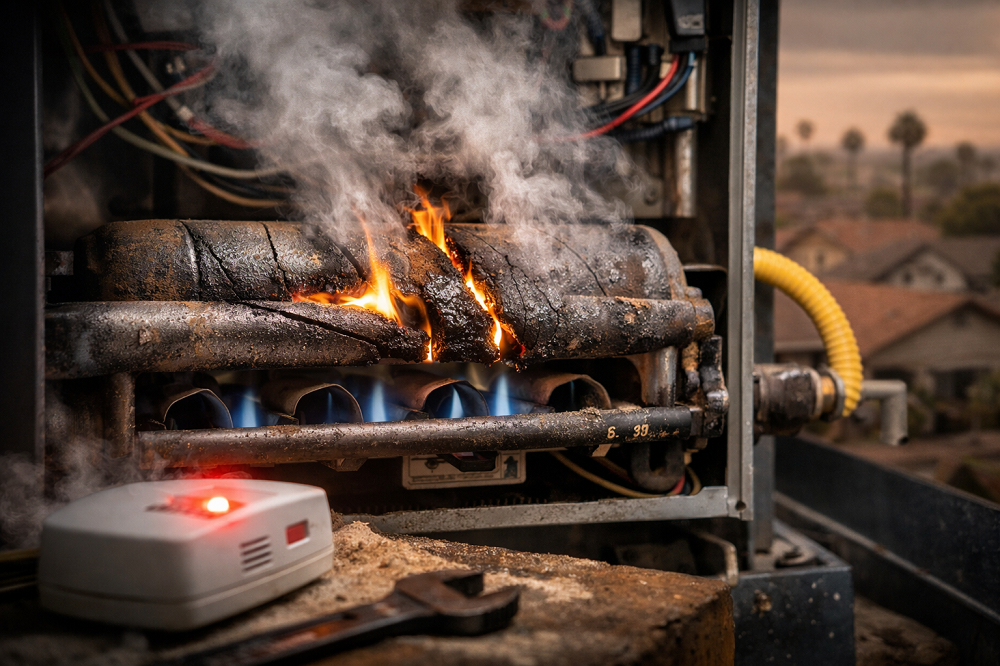
Another sign is a visible flame irregularity. A properly functioning burner flame should burn blue. If the flame is yellow or flickering, it may indicate incomplete combustion caused by a breach in the heat exchanger. This change in flame behavior can also increase the production of carbon monoxide.
Unexplained soot or corrosion around the furnace is another signal that something is wrong. If your carbon monoxide detectors are sounding alerts, do not ignore them or assume it is a false alarm. Treat it as a furnace emergency and leave the premises until the system can be professionally inspected.
The Health Dangers of Carbon Monoxide Exposure
Carbon monoxide (CO) is a silent killer. It is colorless, odorless, and tasteless, making it nearly impossible to detect without a specialized device. When a damaged heat exchanger allows CO to escape into your home, it can lead to acute or chronic health issues depending on the level and duration of exposure.
Short-term exposure to low levels of carbon monoxide can cause flu-like symptoms such as fatigue, dizziness, headaches, and nausea. These symptoms are often mistaken for seasonal illness, leading many people to overlook the true cause. Prolonged exposure or high concentrations can result in confusion, fainting, and death. Children, the elderly, and individuals with respiratory issues are particularly vulnerable.
In homes with gas furnaces, carbon monoxide detectors are not optional. They are essential safety devices that can alert you before CO levels reach a dangerous point. Still, the best defense is regular furnace maintenance and fast action when signs of trouble arise. Furnace emergencies like a cracked heat exchanger cannot be ignored without risking serious consequences.
Why Visalia Homes Are at Particular Risk
Visalia’s climate can put added stress on residential heating systems. Although winters are milder compared to colder regions, sudden temperature shifts and the demand for reliable heat during cool nights can cause frequent furnace cycling. This constant expansion and contraction can weaken the metal in the heat exchanger over time, especially in older units or systems that have not been well maintained.
Homes in Visalia built decades ago may still rely on aging furnace systems. These older models are more prone to heat exchanger damage and less efficient overall. The presence of dust, debris, and lack of routine inspection can accelerate deterioration. In many cases, homeowners may not realize their furnace is failing until it is too late.
For those in Visalia with limited ventilation or airtight homes, the danger becomes even more severe. Modern homes designed for energy efficiency often trap indoor air, which means any leaked carbon monoxide will linger longer and rise to dangerous levels more quickly. It is critical to remain proactive and schedule furnace inspections before the heating season begins.
Furnace Repair: A Crucial Investment in Safety
Ignoring the warning signs of a damaged heat exchanger is never worth the risk. Prompt furnace repair can prevent a minor issue from escalating into a full-blown emergency. Local HVAC professionals in Visalia are trained to detect subtle signs of heat exchanger failure and can recommend appropriate repairs or replacements.
In some cases, if the damage is extensive, replacing the entire furnace may be the safest option. While this may seem like a costly investment, it is a necessary one. Your family’s health and safety depend on a properly functioning heating system. Technicians can also check for other potential problems such as faulty sensors, clogged burners, or inadequate airflow that could worsen the situation.
Regular maintenance is the best way to avoid these dangers altogether. Annual tune-ups, inspections, and cleaning help ensure your furnace operates efficiently and safely. Maintenance visits also offer a chance to catch small issues early before they become emergencies. If your furnace is more than 15 years old or has required frequent repairs, it may be time to consider upgrading to a newer model with modern safety features.
Conclusion
A damaged heat exchanger is not just a technical problem. It is a serious hazard with the potential to harm or even kill. Homeowners in Visalia, CA should not underestimate the dangers associated with carbon monoxide leaks and furnace failures. Recognizing the signs of a failing heat exchanger and acting quickly can save lives.
Whether you are dealing with strange odors, yellow flames, or unexplained symptoms, trust your instincts and get professional help. Furnace emergencies do not wait for convenient timing, and delaying repair only increases the risk. Investing in regular maintenance and timely furnace repair is not just about comfort, it is a vital step in protecting your home and loved ones from a hidden but deadly threat.
Need a HVAC Contractor Near You?
If you’re looking for reliable, family-owned HVAC experts, we’d love to help! At McGee Refrigeration, we’ve proudly served the Visalia area since 1981, providing trusted heating, air conditioning, and restaurant equipment repair for both homes and businesses. Our team is here to answer any questions, offer free estimates, and help you save with our service agreement discounts. Don’t wait to get the comfort and dependability you deserve; reach out to us today!